
Maritime Capability
Ship-to-Ship Transfer Detection
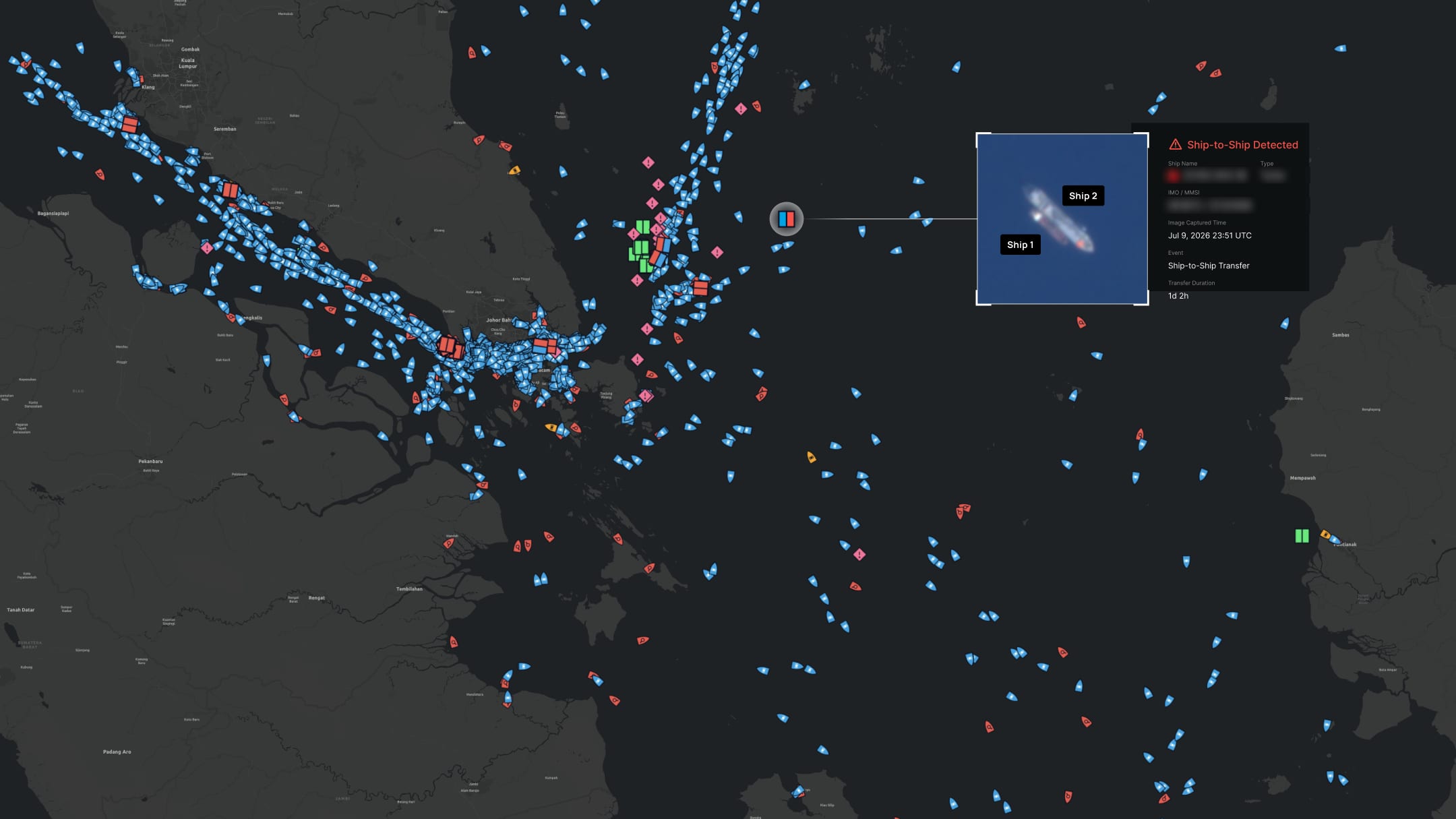
Detect vessel proximity events used to transfer cargo covertly, evade sanctions, or obscure origin, from satellite, whether or not AIS is broadcasting.
The Problem

When cargo changes hands at sea.
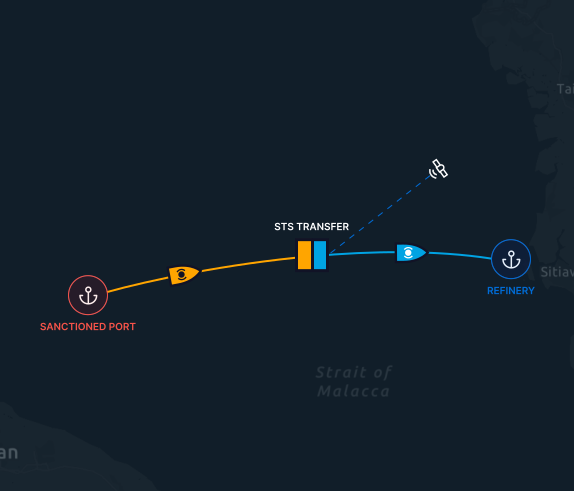
Ship-to-ship transfers move cargo, typically crude oil or refined products, between vessels at sea without docking. Some operations are legitimate, but the practice has become the primary mechanism for sanctions evasion in maritime trade.
A sanctioned vessel transfers its cargo to a “clean” vessel at sea, which then proceeds to port as if the cargo came from a non-sanctioned source. The participants typically go dark or spoof their positions. When one or both disable AIS, conventional platforms see nothing.
How Theia Detects
Detection that works regardless of AIS status.

01 / Optical
Optical STS Detection
Satellite imagery identifies vessel proximity events: two vessels alongside or in close formation, regardless of AIS status.

02 / Correlate
AIS-Correlated Detection
When both vessels broadcast AIS, Theia correlates position data to identify the event, its timing, duration, and participants.

03 / Dark
Dark STS Detection
When one or both vessels disable AIS during a transfer, satellite-based detection identifies the event through imagery alone.

04 / Classify
Transfer Classification
Theia separates legitimate bunkering from potentially illicit transfers using location, participant profiles, and sanctions status.
By the Numbers
STS activity, quantified.
143,401
Optical STS events detected
331,227
AIS STS events detected
Global
Coverage of STS hotspots and open-ocean transfer zones
Use Cases
Where STS detection matters.

Sanctions Enforcement

Insurance Claims Investigation

Commodity Trading Verification

Environmental Monitoring
Related Capabilities
STS rarely happens in isolation.

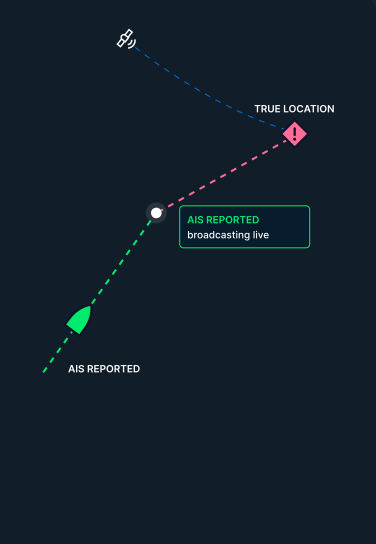
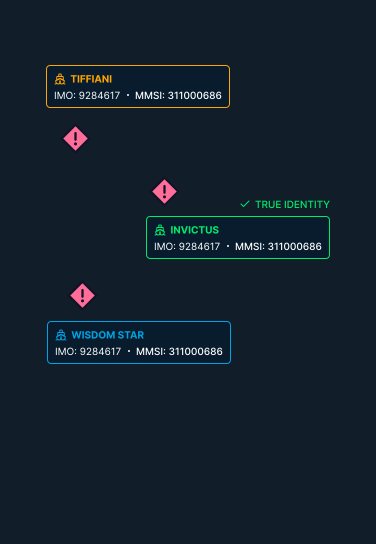
Ship-to-ship transfers connect directly to the deception tactics Theia tracks across the maritime domain.
Get Started
Monitor STS activity in real time.
Request a demonstration and see how Theia detects transfers that AIS-dependent platforms miss.