

Capability
The rig count is a survey.
The pad is a fact.
Rigs and frac crews, counted from orbit.
Published rig counts depend on who responds, miss much of the private activity and arrive after the move has started. SynMax counts what is actually on the pad, for every operator, so a change in activity reaches you while it is still a change in activity rather than a line in next quarter’s report.
The Problem
Counts you cannot verify are counts you cannot trade.
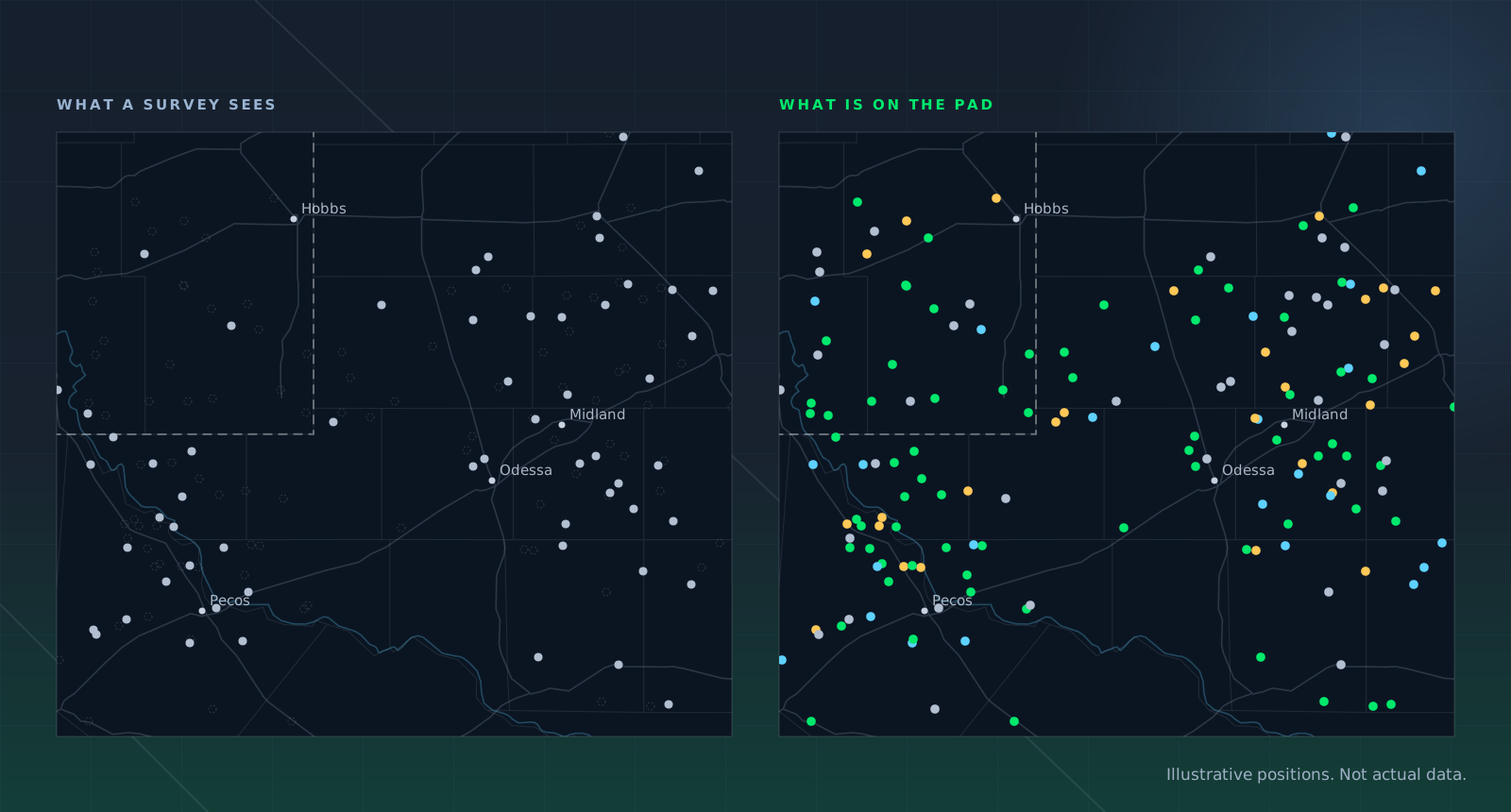
Published rig counts are surveys. They miss private operators, lag the move, and tell you nothing about whether the crew on site is actually completing a well.

Seen, not surveyed

Ahead of the filing

Whole-basin coverage

Activity, not just presence
Ahead of the Survey
See the turn before the survey does.
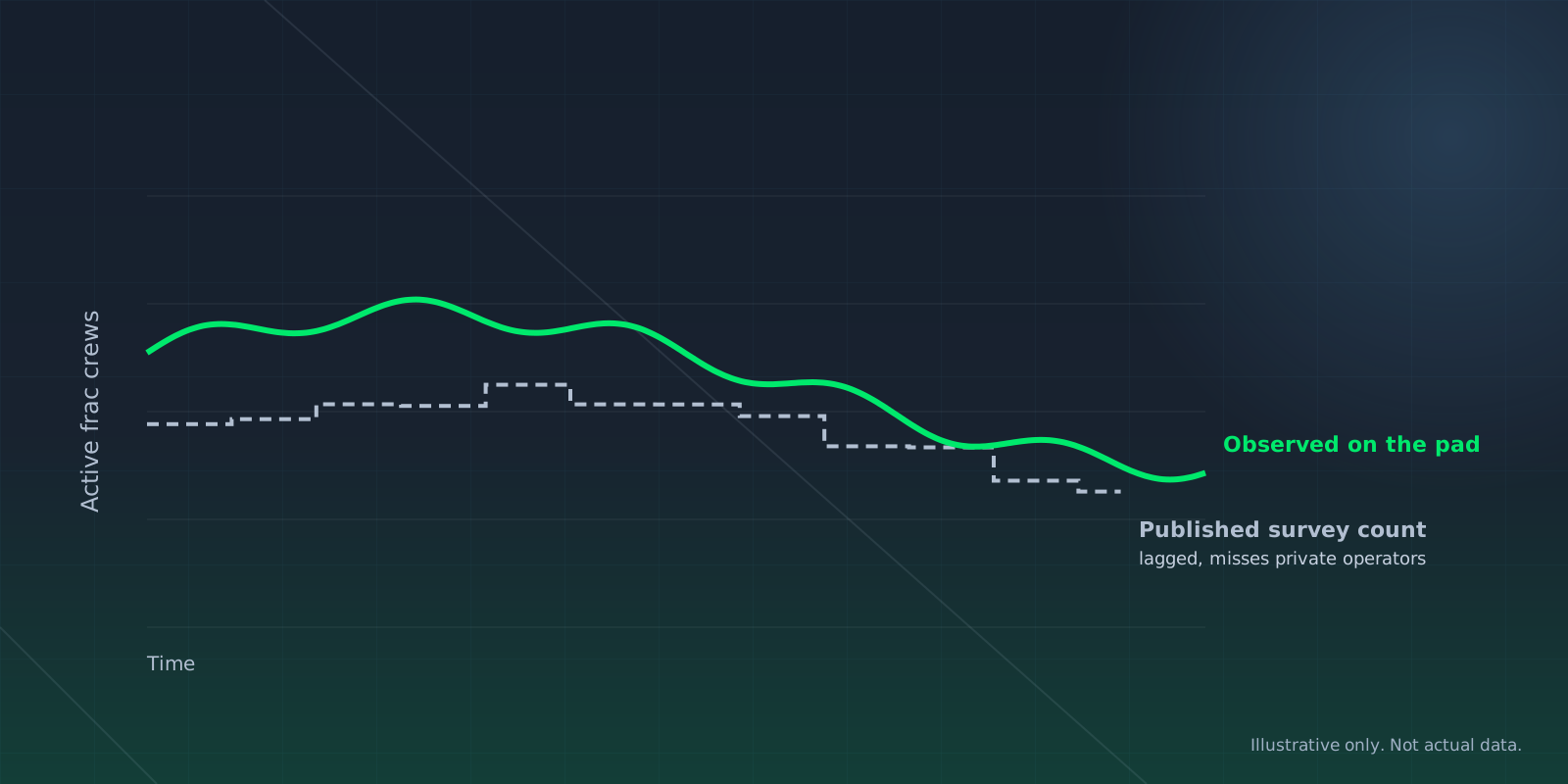
Activity rarely changes direction all at once. A few operators drop a crew, a few more defer completions, and the basin trend bends weeks later. Because the observed count is built pad by pad, that bend shows up as it starts, not when the next survey or filing confirms it.
For a trading desk, that is time to position. For an operator or a service company, it is an early read on where the basin is heading and who is driving it.
How It Works
Detect, classify, count.

01 / DETECT
Find the equipment
High-revisit imagery across producing basins picks up rigs, frac spreads and supporting infrastructure on the pad.

02 / CLASSIFY
Say what it is
Models separate drilling from completion from idle equipment, and attribute each pad to an operator and a well.

03 / COUNT
Track the trend
Counts roll up by operator, county and basin with history attached, so a shift reads against its own baseline.
Whole-Basin Coverage
Every pad. Every operator.
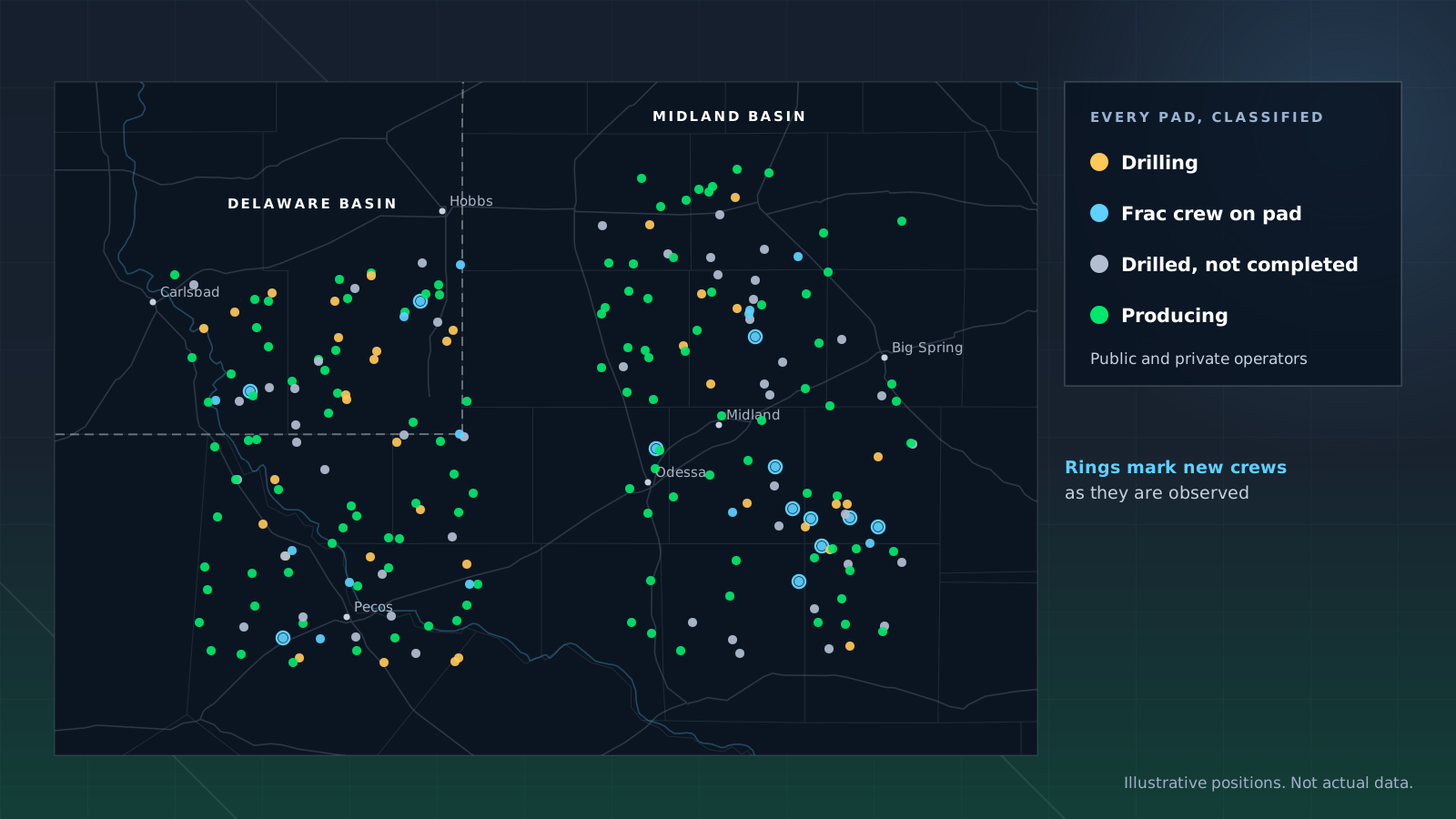
Public operators report on their own schedule. Private operators disclose far less, and their activity is often the hardest part of a basin to see.
Observation does not depend on disclosure, so every pad is classified the same way: drilling, crew on location, drilled but waiting on completion, or producing. Roll it up by operator, county or basin and the history comes with it, so each change reads against its own baseline.
Coverage
What is in the count.
Activity observed on the pad, classified and attributed, then rolled up so a change reads against its own history.
In the Platform
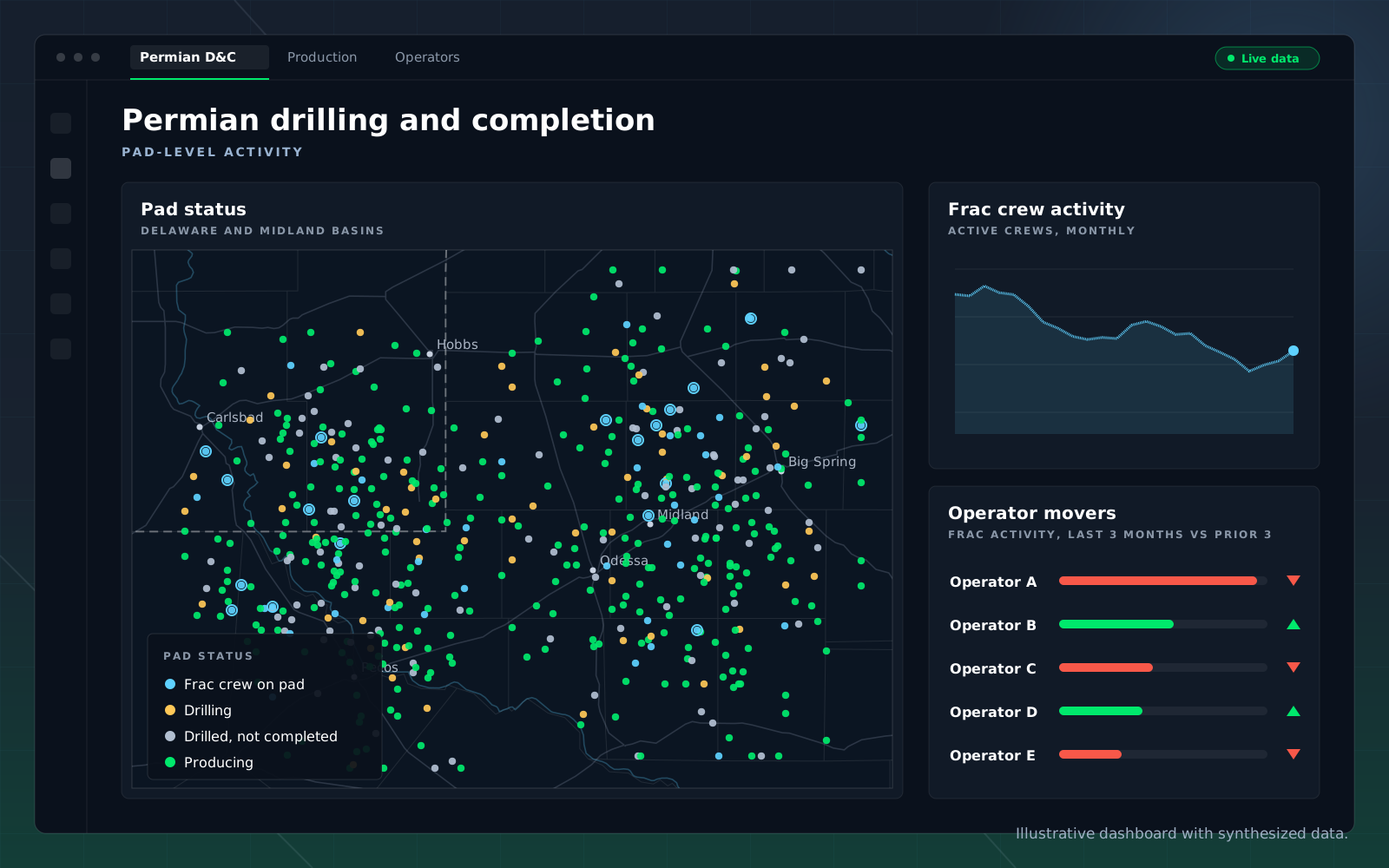
Activity, on one screen.
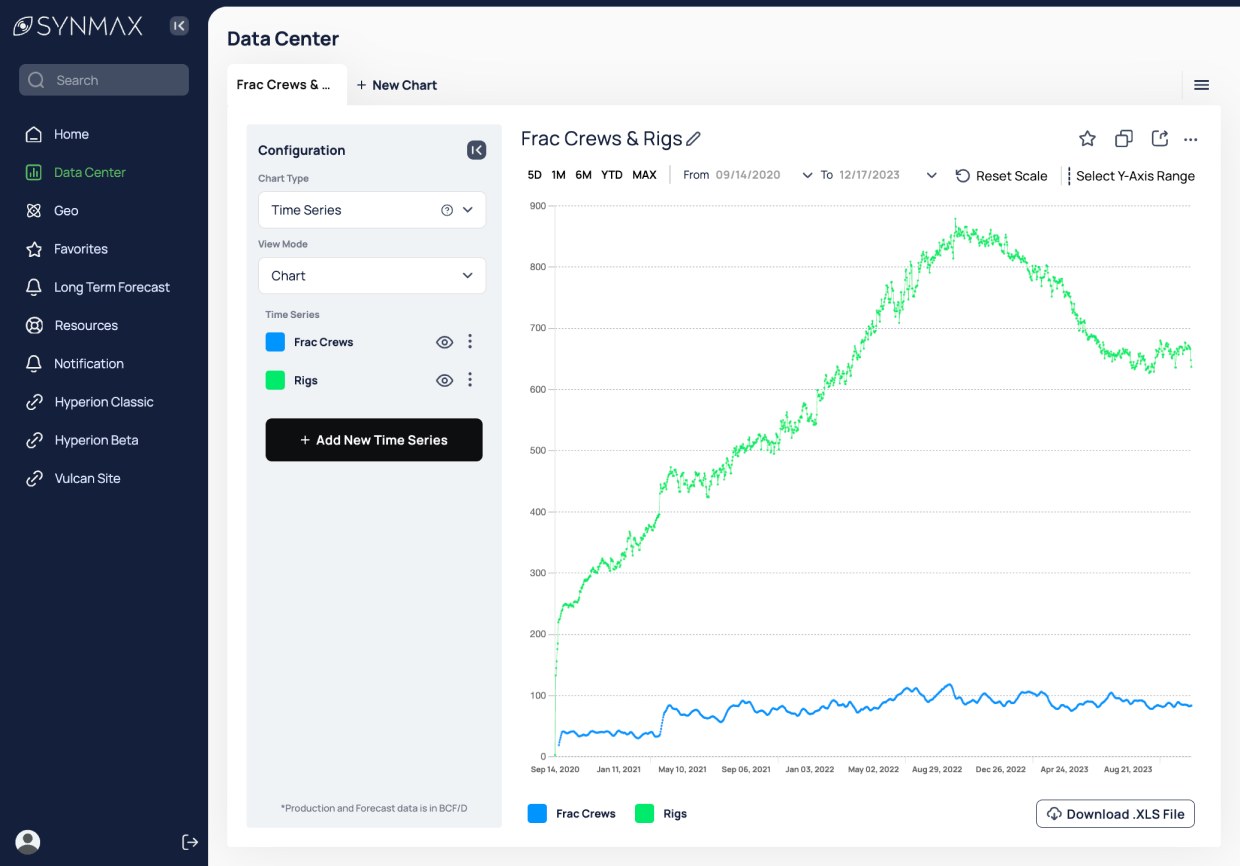
Pad status across a basin, the crew trend and the operators moving it, in one view.
Start from the basin and narrow to a county or an operator, with the history attached. When a crew arrives on a pad you are watching, it shows up here before it reaches a filing.
Who Uses It
One count, three decisions.
The same pad-level record answers different questions depending on the desk asking.

Upstream teams

Trading desks
Lenders and investors
Use Cases
What you can ask it.

When did a frac crew arrive on this pad?
Which basins show a change in completion activity?

How many DUCs is this operator carrying?
Which competitor wells look delayed against public expectations?
Is this operator running the rig count they guided to?
How long from spud to completion on this acreage?
FAQ
Questions buyers ask.
How is this different from a published rig count?
Published counts are surveys. They depend on who responds, miss private operators and lag the move. This count starts with equipment detected on the pad, so every operator is counted on the same basis.
What does it detect?
Rigs, frac spreads and supporting infrastructure on the pad, classified as drilling, completion or idle, with drilled but uncompleted wells tracked until a crew arrives.
How soon does a change show up?
A crew arriving on location is visible once it is observed. The completion report that confirms it follows much later.
Can I get an alert when a crew arrives?
Yes. Watch a pad, an operator or an area and get notified when a frac crew shows up.
How does activity connect to production?
Completions are the leading edge of supply. The activity observed here feeds the well-level forecasts in Production Monitoring.
How do I get the data?
In the platform, through agents, by API, in Snowflake or in Excel, so the answer arrives in the system your team already uses.
Get Started
Put a crew-level count behind your call.
Tell us the basin or the operator you need watched and we will show you the observed activity count against the published one.