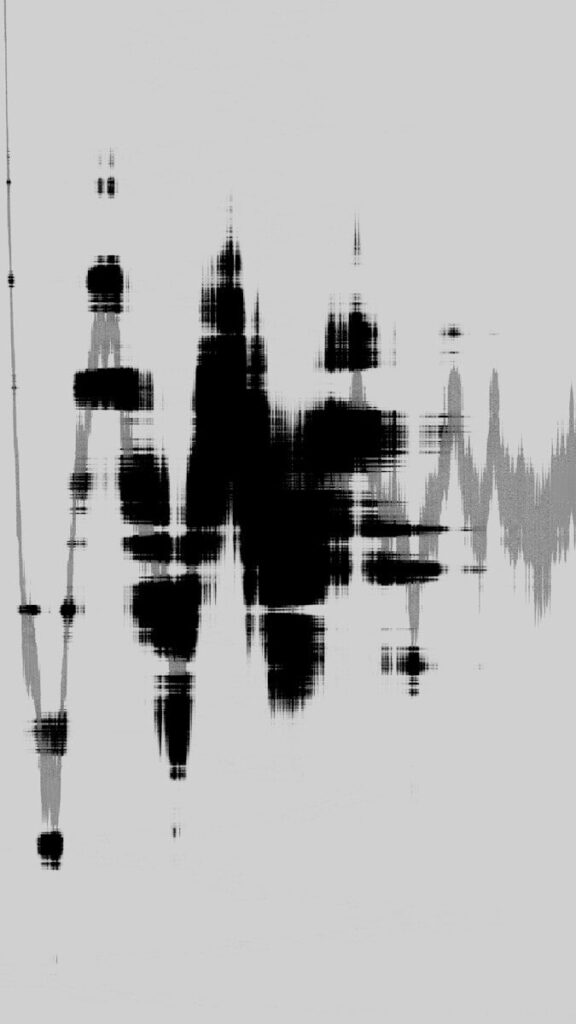
Radio frequency detection, commonly shortened to RF detection, is the practice of locating and characterizing vessels by the radio signals they emit rather than by the position they choose to report. Ships radiate energy during normal operation, from navigation radar to communications equipment, and RF detection picks up those emissions to place activity on the water.
Why emissions are useful
Vessel tracking begins with the self-reported AIS picture and is enriched by direct observation. Imagery does most of that enrichment by showing what is physically present. RF detection adds a different kind of evidence: not what a hull looks like, but what it is emitting. Because emissions come from equipment a vessel operates rather than from a position it elects to broadcast, they can register activity even when a vessel is transmitting no AIS and when imaging conditions are imperfect. (See: How to Track Vessels Without AIS and How to Detect Dark Ships.)
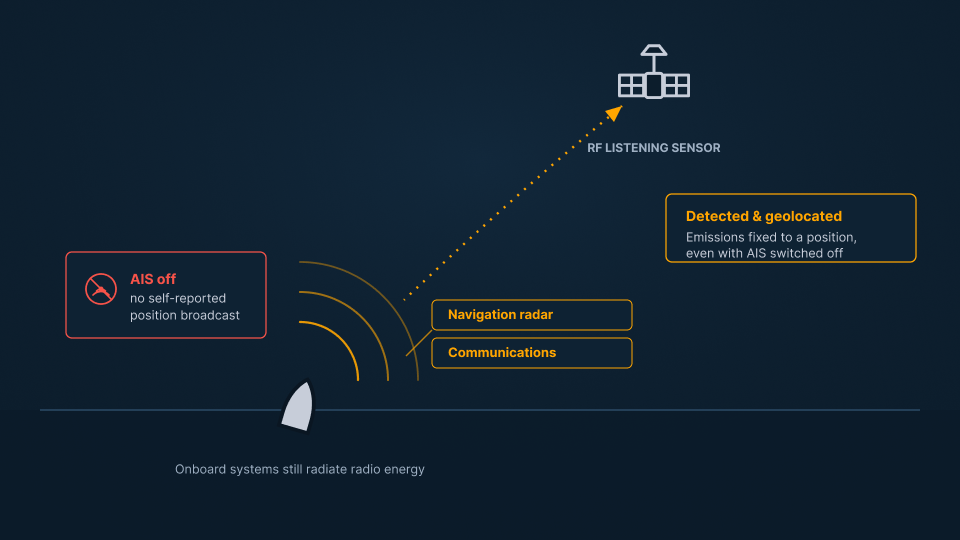
What RF detection contributes
RF observation adds a complementary layer to the picture. On its own it indicates that a source of emissions is present at a location. Its value grows when it is combined with the rest. Imagery confirms a physical hull and its dimensions, the AIS baseline says what should be there, and RF ties activity to the electromagnetic behavior of the vessel. Each layer reduces the ways a ship can pass unaccounted for. (See: How Satellite Vessel Detection Works and What Is Maritime Domain Awareness.)
Where RF sits in the toolkit
RF detection is a supporting source, not the centrepiece. Imagery is sufficient for the great majority of maritime work, and RF earns its place in the specific cases where emissions reveal something that imaging and self-reported data do not. Like any single source, an RF hit is a candidate rather than a conclusion. It gains meaning only when correlated against the reported picture and weighed in context, which is where an emission at a location becomes a vessel worth understanding.
From signal to certainty
A vessel that goes quiet on AIS is not necessarily silent across every channel. SynMax delivers the capability to make sense of that through Theia, combining the AIS baseline, imagery, and supporting sources like RF, then applying the judgment that identifies which activity actually matters.
That is the standard we hold to across everything we build: Ground Truth for Every Decision.
If your team needs to see activity that self-reported data alone would miss, request a demo and we will show you what that looks like across your area of interest.