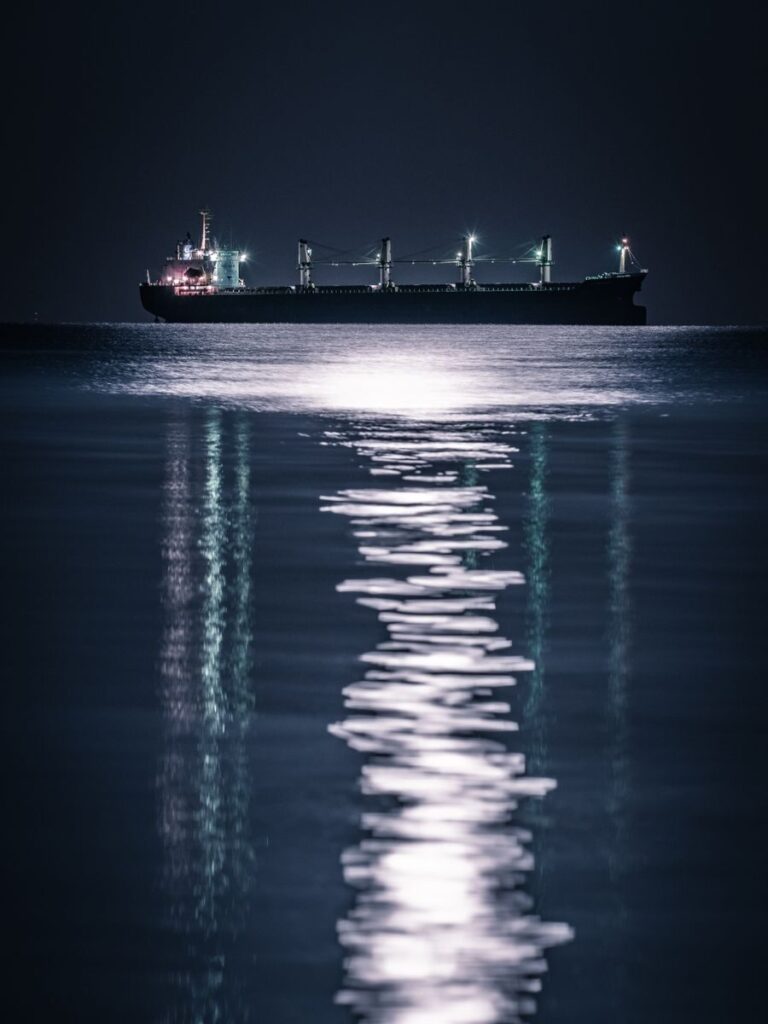
A dark ship is a vessel that is not transmitting AIS. The term often carries an implication of intent, but the first thing to establish is that going dark is not inherently illicit. AIS is voluntary, and many vessels operate without it for ordinary reasons. Detecting dark ships that matter means using the AIS baseline to notice what is missing, enriching it with imagery to see what is actually there, and judging which absences are worth pursuing. This guide covers the workflow.
Step 1: Use the baseline to define the absence
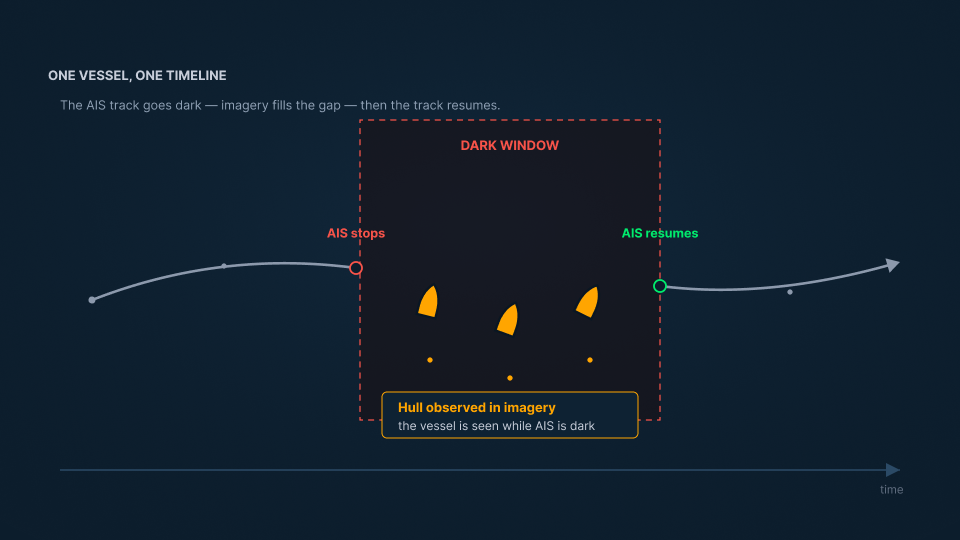
The reported picture is the starting point. It shows the cooperative traffic and, just as usefully, where a vessel that had been transmitting has stopped. A track that runs and then ends leaves a gap in the baseline that defines a window in time and a region to search. That absence is what makes the case investigable, because it points to where an unaccounted hull might be. (See: How to Identify and Investigate AIS Gaps.)
Step 2: Enrich with imagery to locate the hull
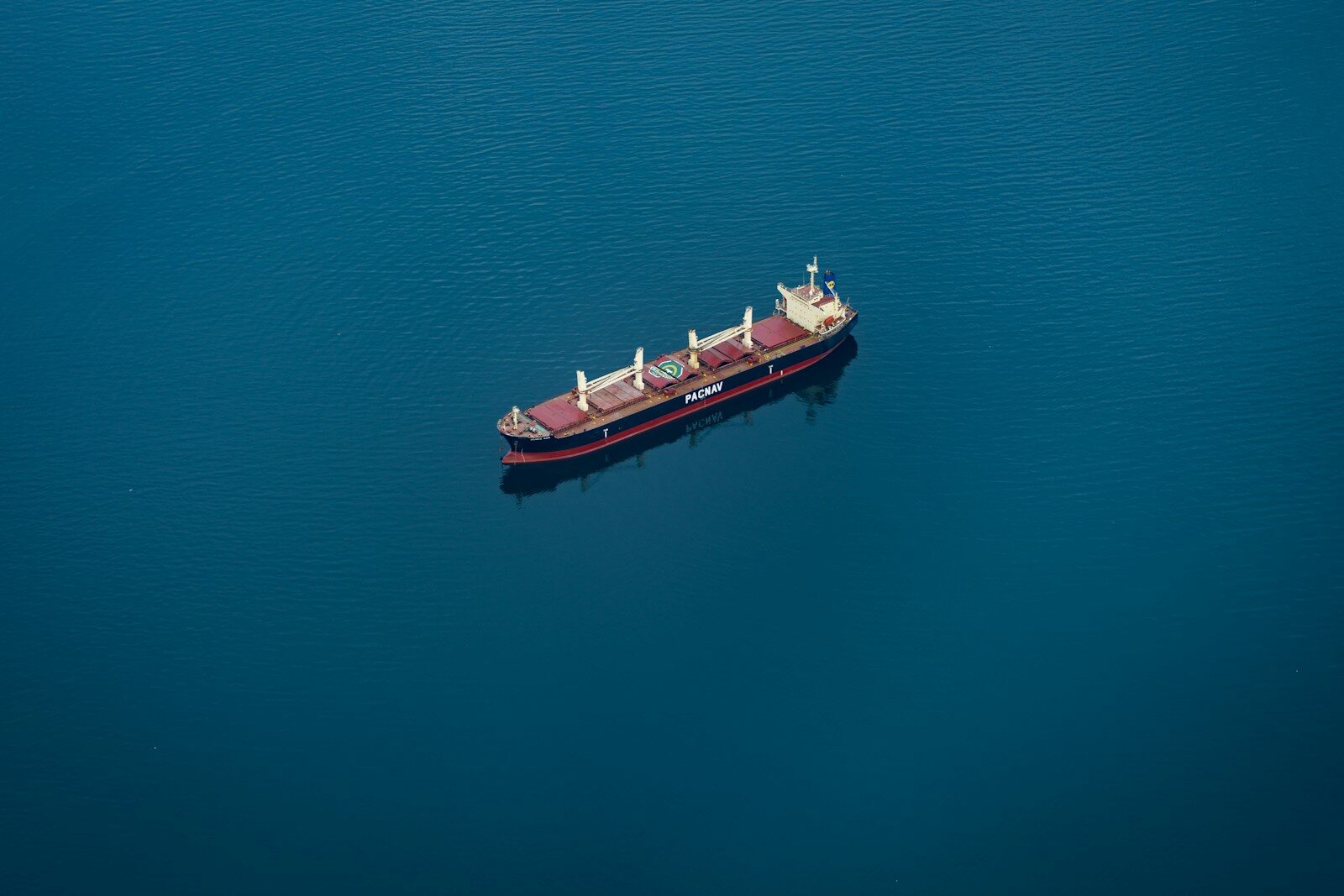
A dark ship transmits no position, but it remains a physical object on the water. Imagery observes the sea directly and reveals hulls regardless of whether they are transmitting, and it is sufficient for most of this work. Where conditions require it, radar imaging holds up through cloud and darkness, and radio frequency detection can register emissions from a vessel that is otherwise quiet. Observations that fall inside the baseline gap, in the area the vessel could plausibly have reached, are strong candidates for the dark vessel. (See: How Satellite Vessel Detection Works and How to Track Vessels Without AIS.)
Step 3: Judge which dark vessels matter
This is the step that separates signal from noise. A hull located inside a dark window is a candidate, not a finding, and context decides its significance. A ten-metre pleasure craft with no transponder is almost certainly nothing. A fifty-metre cargo vessel that went dark as it approached a sanctioned port, or during a rendezvous at sea, is worth close attention. The detection can look identical; the vessel class, the location, and the timing are what assign meaning. Weighing the behavior around the absence, rather than the absence alone, is the heart of the method.
Step 4: Attribute and assess
Once a dark vessel of interest is located, the task is to establish which vessel it is and reconstruct why it went dark. Physical measurements from imagery are matched against vessel records to resolve identity, and the vessel’s history is examined. Deliberate dark behavior is common among shadow-fleet vessels and frequently accompanies other deceptive practices, so a confirmed case often warrants a fuller risk assessment. (See: What Is the Shadow Fleet.)
From darkness to detection
Going dark defeats systems that depend on cooperation, but on its own it proves nothing. SynMax delivers the capability to work through that through Theia, using the AIS baseline to spot the absence, imagery to fill it, and judgment to identify the dark vessels that genuinely warrant attention.
That is the standard we hold to across everything we build: Ground Truth for Every Decision.
If your team needs to find the vessels that have gone dark, request a demo and we will show you what that looks like in your area of interest.