The seabed carries the infrastructure that modern economies depend on. Subsea cables move the overwhelming majority of international data, and pipelines carry power and gas between nations. That infrastructure is exposed, and a series of incidents has made its vulnerability unmistakable. Protecting it is, at its core, a maritime domain awareness problem: because the threat comes from vessels operating above the infrastructure, protection means understanding what those vessels are doing. This analysis explains why.
The nature of the threat
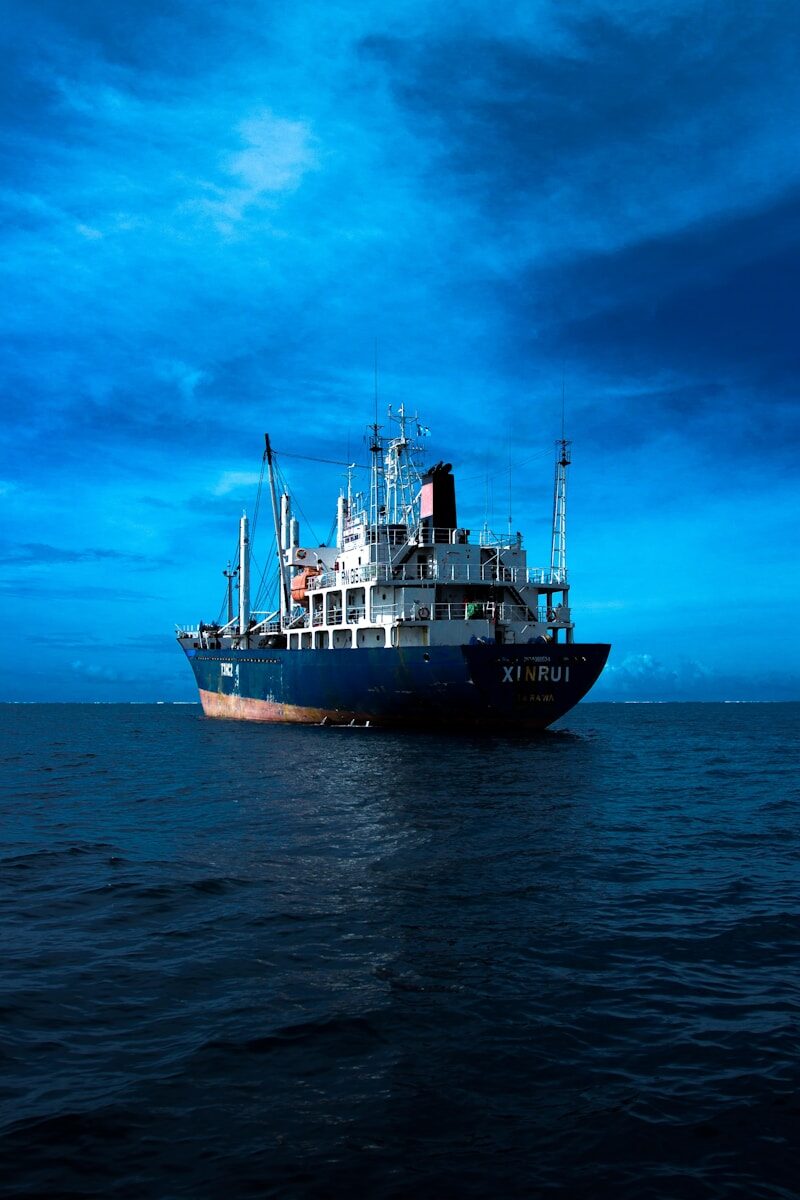
The recent pattern is consistent. A vessel operating in international waters passes over a cable or pipeline corridor, and the infrastructure is damaged, frequently by an anchor dragged along the seabed. Since late 2023, a series of such incidents in the Baltic Sea has damaged multiple cables and at least one pipeline, often involving vessels linked to the shadow fleet. Similar concerns extend to other regions where critical links cross busy or contested waters. (See: What Is the Shadow Fleet.)
There is genuine debate about intent, and it is worth representing fairly. One view treats these incidents as deliberate sabotage, a form of hybrid pressure against critical infrastructure. Another, advanced by some national investigators, attributes many of them to accidents involving poorly maintained vessels rather than orchestrated attacks. The two views imply different responses, but they share a practical need: to know which vessels were where, when, and behaving how.
Why protection is a domain awareness problem
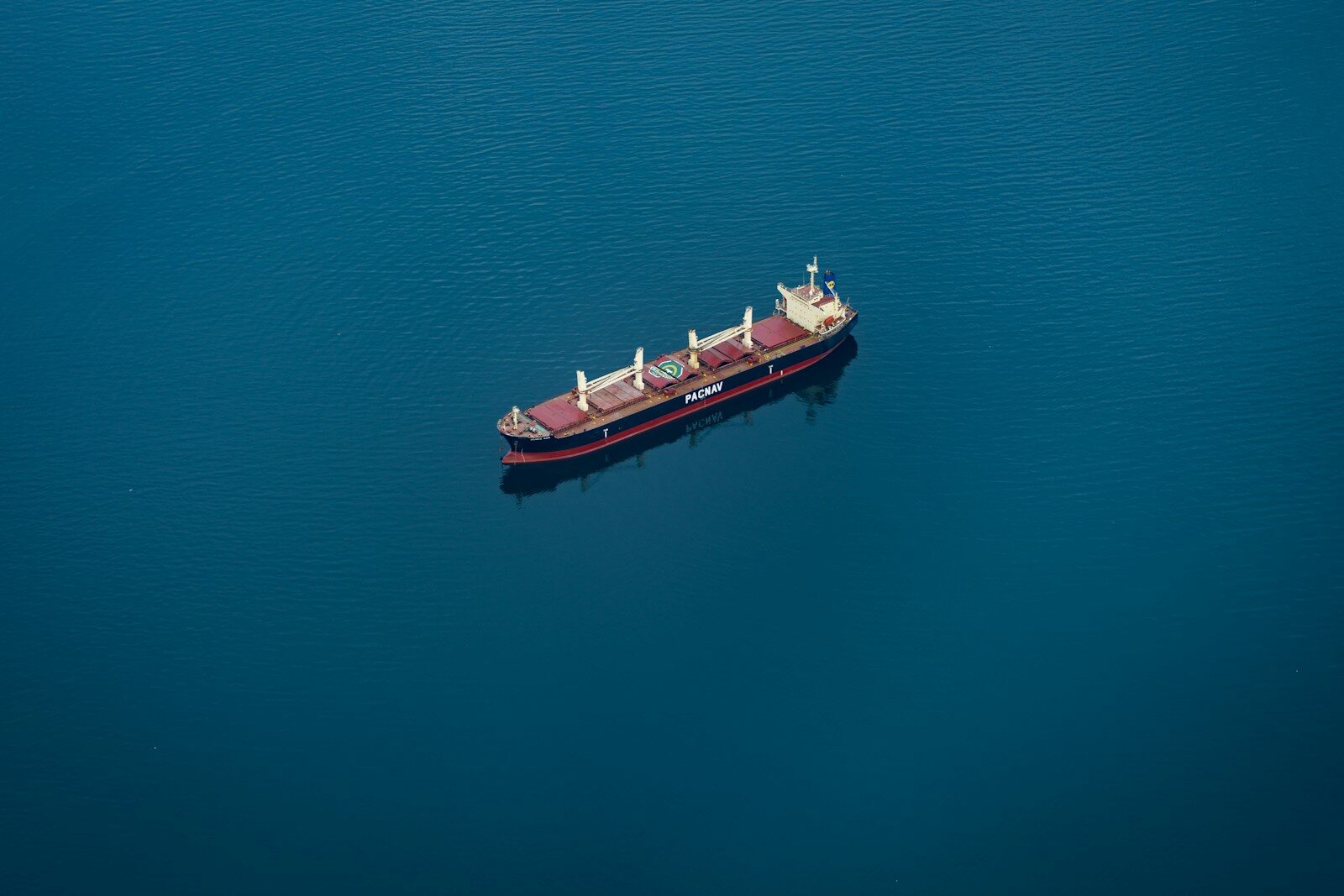
You cannot easily guard the seabed directly across the vast distances that cables and pipelines span. What you can do is watch the water above them and understand the vessels that pass through the corridors. The protective questions are all about vessel behavior: which vessels entered a corridor, whether any slowed, loitered, or stopped over it, whether a vessel’s movements are consistent with dragging an anchor, and whether a vessel of concern is present when damage occurs. (See: What Is a Vessel of Interest.)
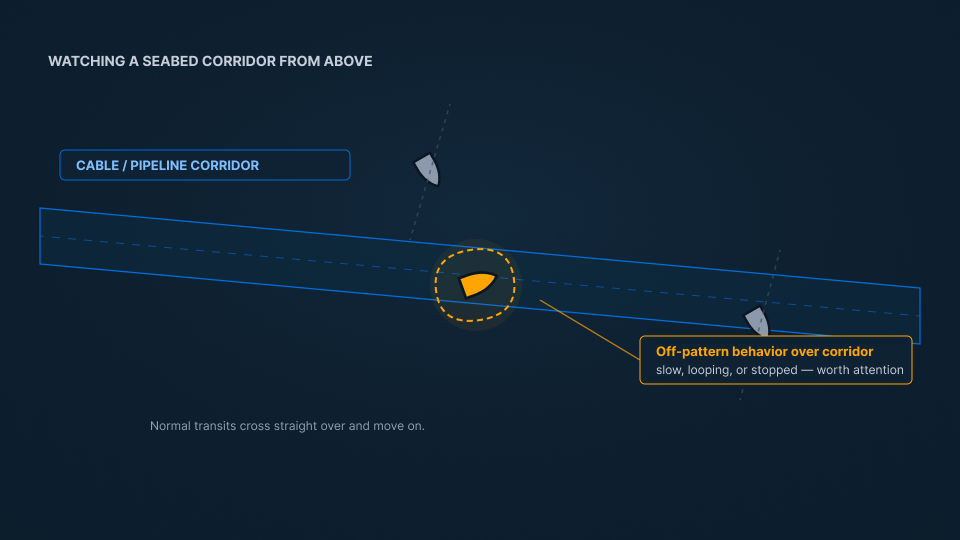
Answering those questions is exactly the discipline used across maritime domain awareness. The self-reported picture shows the cooperative traffic transiting a corridor, imagery of the water establishes what is actually there including vessels not transmitting, and correlating the two against a baseline of normal transit surfaces the anomalies: an unexpected stop, a slow pass, a vessel present that should not be. (See: What Is Maritime Domain Awareness.)
The attribution challenge
The hard part is attribution, and it is both a legal and an analytical problem. A vessel in international waters that damages a cable is difficult to hold to account, and establishing what happened requires a defensible reconstruction of the vessel’s identity, presence, and behavior around the incident. This is where a consolidated vessel history matters: verifying which vessel was present, correlating its observed movements against the timing of the damage, and placing that behavior in the context of the vessel’s record. (See: How to Build a Vessel Risk Profile.)
Because the vessels involved are sometimes the same aging, opaquely owned ships that operate in the shadow fleet, the tools for understanding them overlap with those used for sanctions work.
From seabed to surface
Infrastructure on the seabed is defended by understanding the vessels on the surface. SynMax delivers that understanding as a capability through Theia, watching the corridors that matter, correlating observation against the self-reported picture and a baseline of normal activity, and applying the judgment that flags which vessels near critical infrastructure warrant attention.
That is the standard we hold to across everything we build: Ground Truth for Every Decision.
If your team is responsible for infrastructure beneath busy or contested waters, request a demo and we will show you what that looks like in your area of interest.