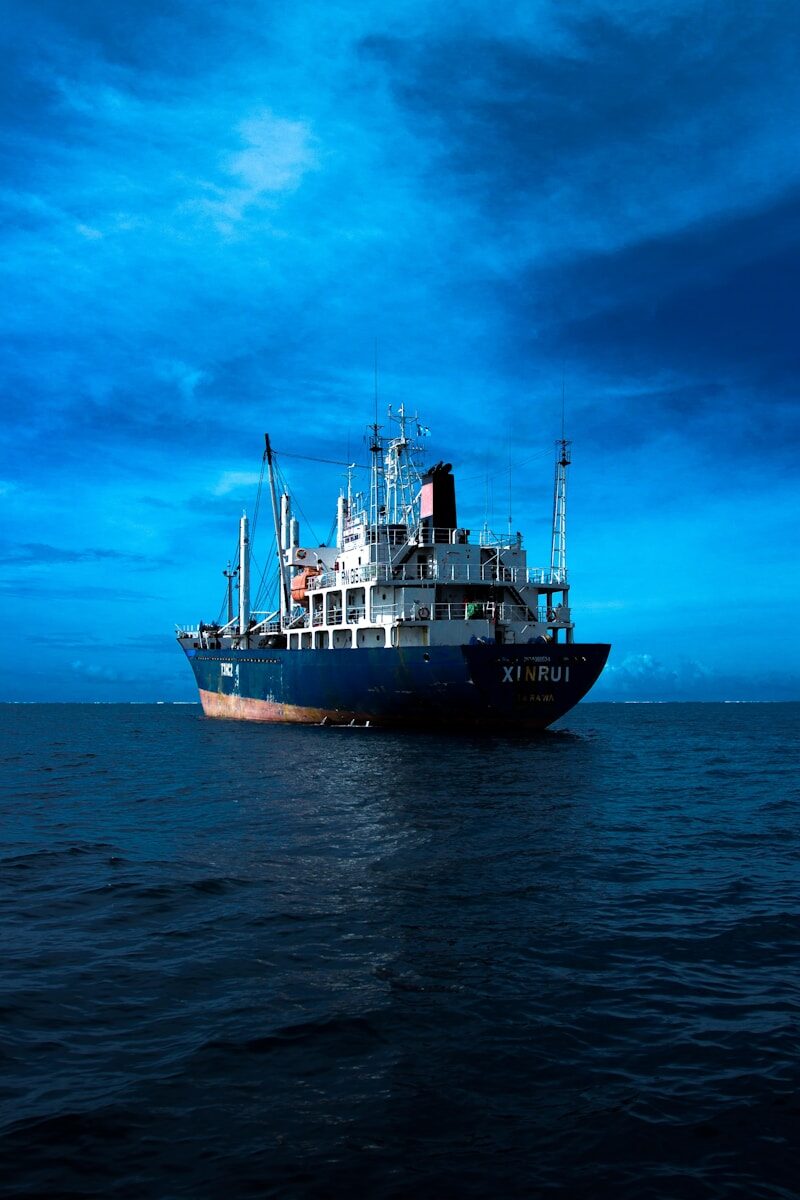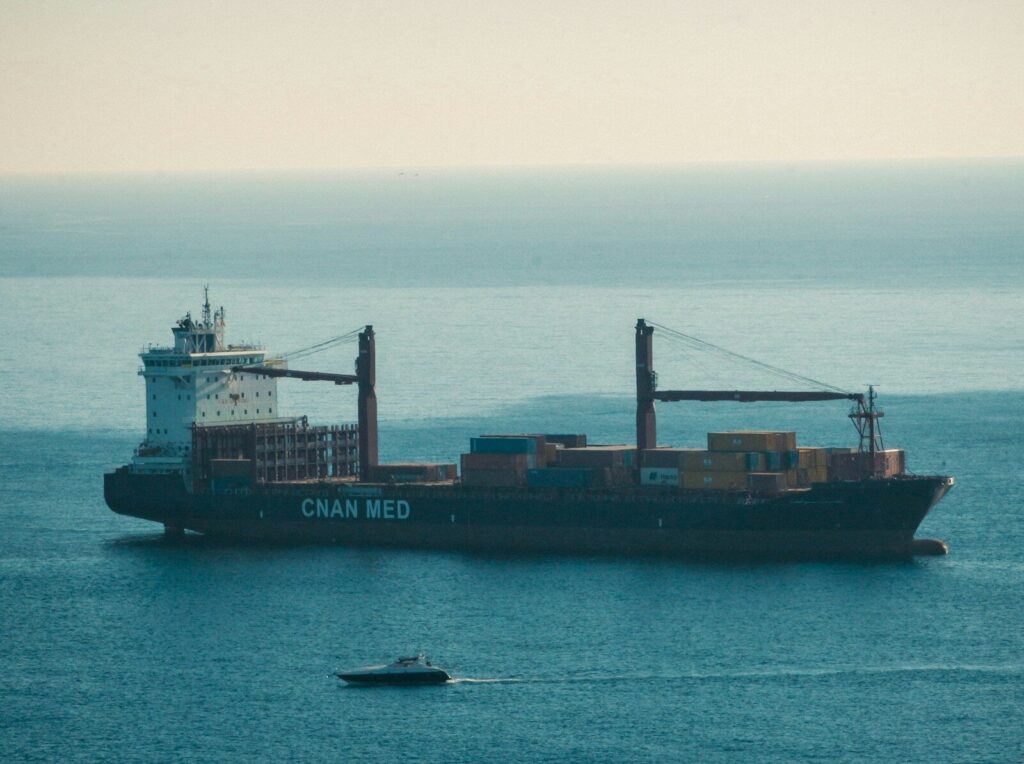
A vessel risk profile is a consolidated assessment of a single ship, bringing its identity, ownership, history, and behavior into one view so that a risk decision can be made with the full picture in hand. Compliance teams, insurers, and financiers build profiles to decide whether to do business with a vessel, and enforcement bodies build them to decide where to focus. This guide covers the inputs and the workflow.
The inputs
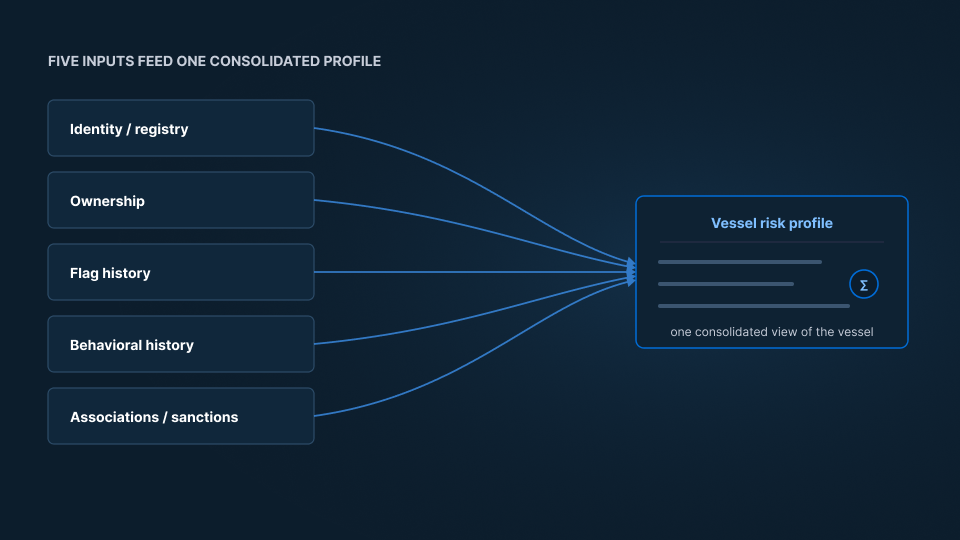
A robust profile draws on several categories of information:
- Identity and registry: current name, IMO number, and MMSI, along with the history of changes to each.
- Ownership: the registered owner, operator, and beneficial owner, and how transparent that ownership is.
- Flag history: the current flag state and the record of prior flags, with attention to frequent changes. (See: What Are Flags of Convenience.)
- Behavioral history: reporting gaps, position spoofing, ship-to-ship transfers, and unusual routing observed over time. (See: Understanding Deceptive Shipping Practices.)
- Associations and sanctions exposure: links to sanctioned entities, ports, or counterparties.
Step 1: Establish a verified identity
A profile is only as reliable as the identity it is built on, and identity is exactly what deceptive vessels manipulate. The first step is confirming which hull the profile describes, checking the claimed identity against imagery of the physical vessel rather than accepting the broadcast at face value. A profile built on an unverified identity can be defeated by a single act of spoofing.
Step 2: Reconstruct the history
With identity established, the vessel’s record is assembled: its ownership and flag changes over time, its past routes, and its documented behavior. Frequent flag hopping, a pattern of reporting gaps in sensitive areas, or a history of transfers with concealment each add weight. The value here is continuity, holding the vessel’s full history in one place even when the vessel has worked to fragment it.
Step 3: Assess behavior against context
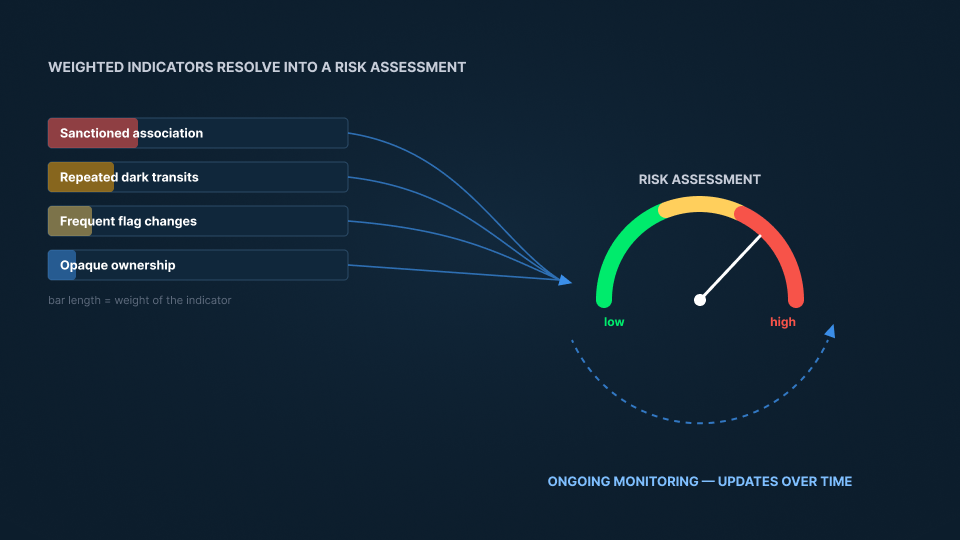
History is interpreted in light of where and how the vessel operates, because the same behavior carries different weight in different circumstances. A reporting gap on a small craft in an area of poor coverage is minor. The same gap on a large tanker approaching restricted waters, aboard a vessel with opaque ownership, is significant. Weighing indicators together rather than in isolation is what separates a meaningful assessment from a checklist, and it is why no single data point, including the absence of AIS, decides a profile on its own. (See: What Is a Vessel of Interest.)
Step 4: Score, decide, and monitor
The assessment supports a decision: proceed, decline, or examine further. A profile is not a one-time artifact, because a vessel’s risk changes as it changes flag, ownership, behavior, and associations. Keeping the profile current through ongoing monitoring ensures the decision rests on the vessel as it is now, not as it was when first screened. This matters especially for insurance and compliance teams carrying exposure over time. (See: Maritime Sanctions Risk for Insurance and Compliance Teams.)
From fragments to a full picture
A vessel that wishes to obscure its risk works by scattering its history and blending in with ordinary traffic. SynMax delivers the capability to reassemble it through Theia, consolidating verified identity, behavior, and associations into a profile that reflects the vessel as it actually operates, and that flags which vessels warrant a closer look.
That is the standard we hold to across everything we build: Ground Truth for Every Decision.
If your team needs defensible risk profiles on the vessels you deal with, request a demo and we will show you what that looks like in your area of interest.