AIS is indispensable. It is the base layer of maritime tracking, it carries identity and position for cooperative traffic across the world, and no serious maritime picture is built without it. The argument here is narrow and specific: for security purposes, AIS on its own is not enough, because the vessels a security team most needs to see are precisely the ones AIS is least able to show. This analysis explains why, without diminishing what AIS does well.
AIS answers a question, but not the security question
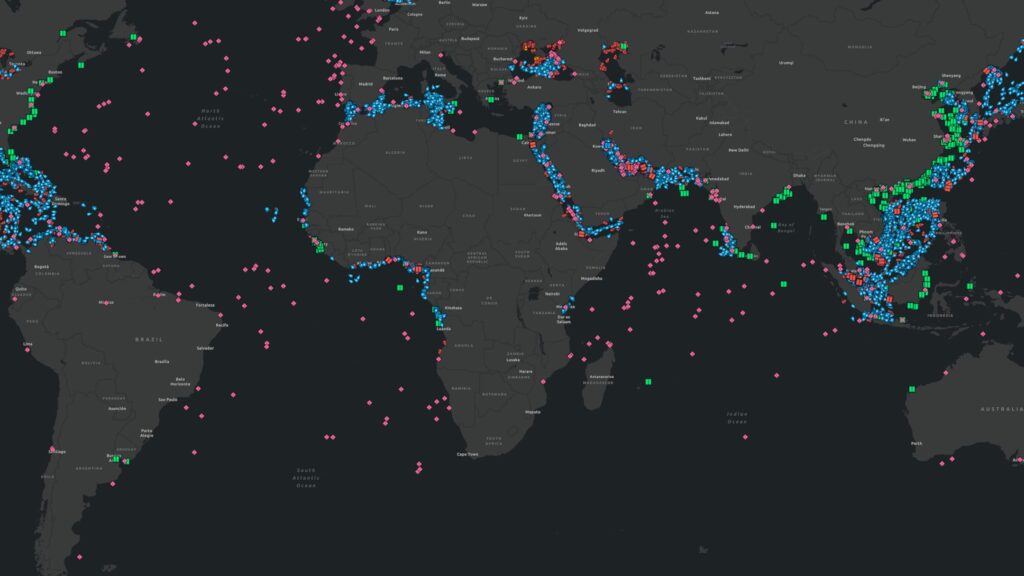
AIS reliably answers “which vessels are declaring themselves, and where.” For safety and routine traffic management, that is often the whole job. Security asks a harder question: “what is actually on this water, including the things that would rather not be seen.” Those are different questions, and the gap between them is where security risk lives.
The reason is structural. AIS is voluntary and self-reported. It describes what vessels choose to say about themselves. A cooperative operator says something true. An operator with something to hide can say nothing, or say something false, and AIS faithfully passes along the silence or the lie.
What AIS alone misses
Three cases illustrate the shortfall:
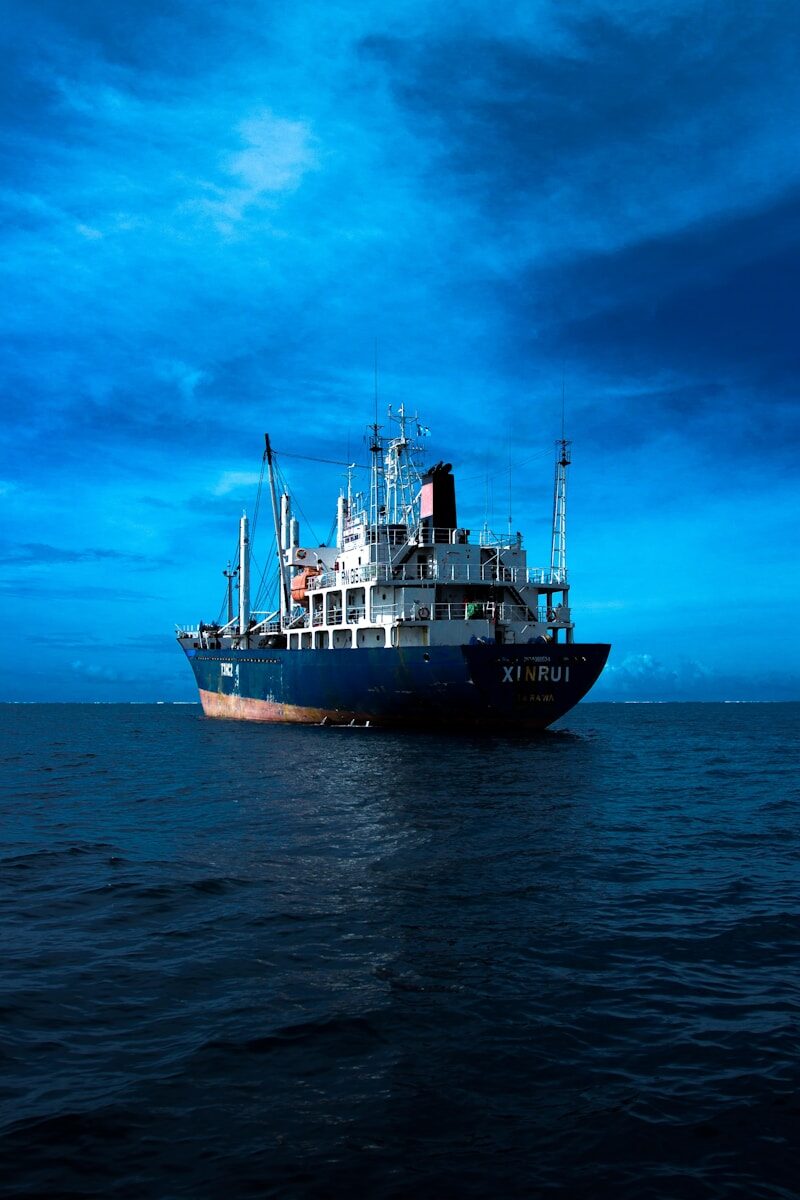
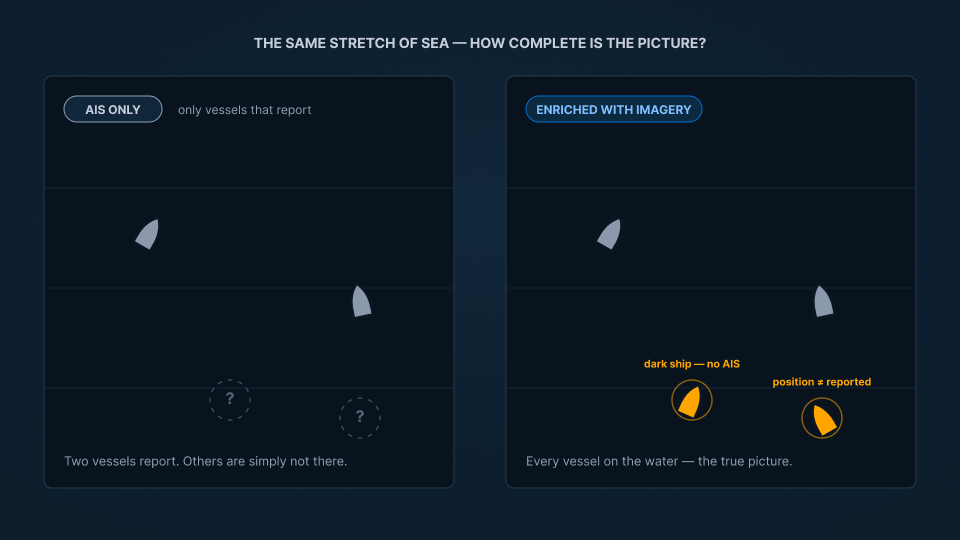
- Vessels not transmitting. A vessel can operate without AIS. For a small craft this is unremarkable, but for a large vessel moving through sensitive waters it can matter a great deal, and AIS shows nothing at all.
- Falsified positions and identities. A spoofed track looks entirely plausible, which makes it more dangerous than an absent one. It invites no suspicion while quietly corrupting the picture everyone relies on. (See: What Is AIS Spoofing.)
- Behavior between reports. Even honest AIS is a series of position reports. What a vessel did in the gaps, a rendezvous, a diversion, a change in draft, is not in the feed unless something independent fills it in.
Completing the picture
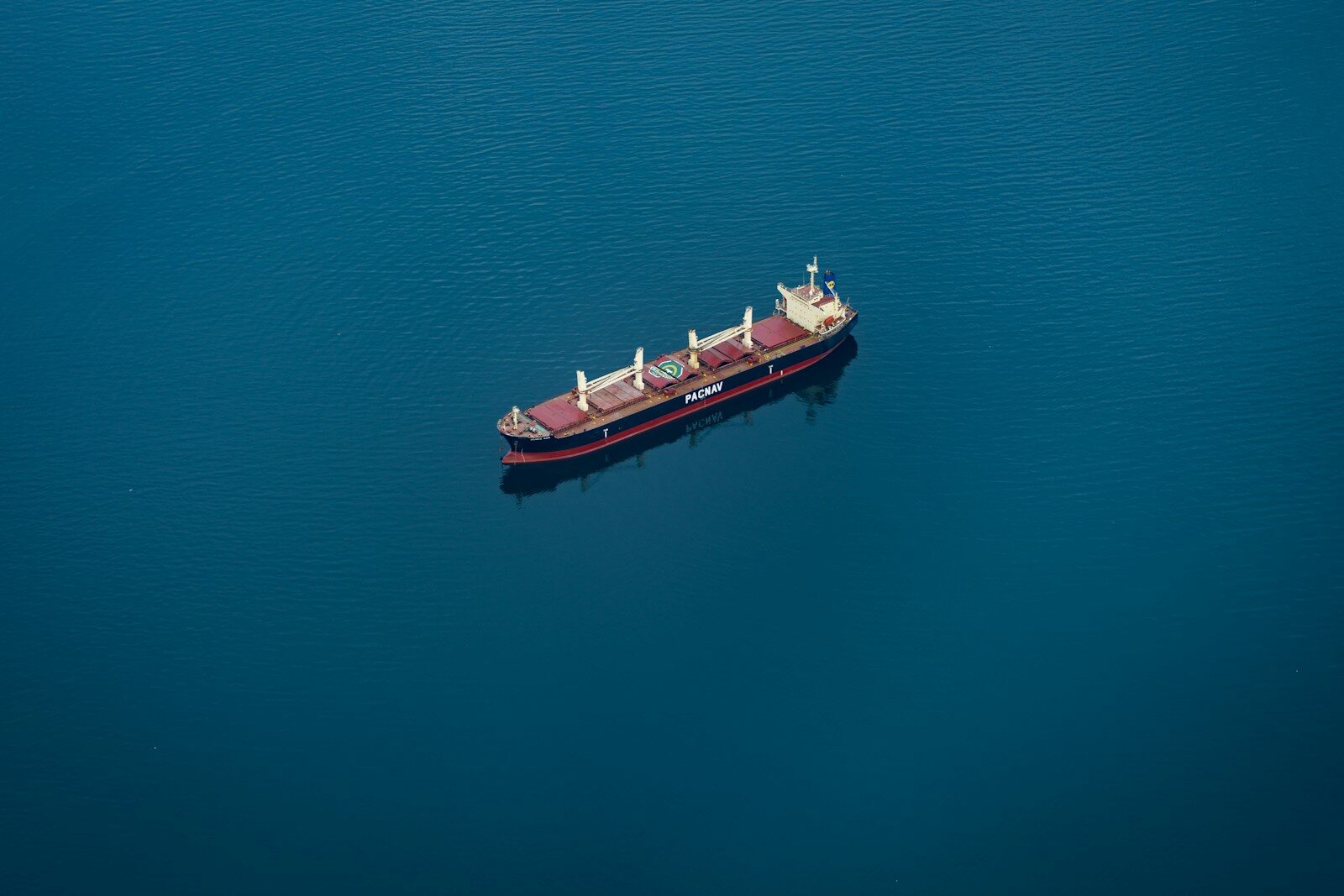
The fix is not to replace AIS. It is to treat it as the base it is and enrich it with direct observation. Imagery of the water shows what is physically present regardless of what a vessel broadcasts, and correlating that observation against the AIS baseline is what exposes the silences and the lies. A hull with no AIS becomes visible; a track with no hull becomes suspect. (See: AIS vs Satellite Tracking and How to Detect Dark Ships.)
Enough for what, and the role of judgment
“Not enough” does not mean “not valuable.” AIS is enough for a great deal, and for the cooperative majority it needs no supplement. It is specifically insufficient as a sole basis for security, where the vessels of concern are the ones acting against the assumptions AIS depends on. And even a fully enriched picture is only candidates until judgment is applied, because absence of AIS is not itself a threat. Context, vessel type, and history decide which unaccounted hulls matter. (See: What Is Maritime Domain Awareness.)
SynMax delivers that completed picture as a capability through Theia, keeping AIS as the base, enriching it with imagery, and applying the judgment that turns an incomplete self-reported feed into an answer a security decision can rest on.
That is the standard we hold to across everything we build: Ground Truth for Every Decision.
If your team relies on AIS for security and needs to see what it misses, request a demo and we will show you what that looks like in your area of interest.